Sims 4 Genetics

Reverse Engineering Genetics in the Sims 4

Summary

I figured out how the genetics system of The Sims 4 works by using graph trends to look for patterns between two parent Sims’ features and their child’s features. I discovered that feature shapes are different between male and female Sims, but that they map to one another. A baby’s features as a young adult are able to be somewhat predicted, though there is an element of randomness. The most reliable shape feature had 93.62% predictable outcomes, and the most reliable color feature had 100% predictable results.

Project Details

The Sims is a video game franchise where players make virtual characters — called Sims — and play through their lives. The Sims was first released in 2000 and the game is now on its fourth iteration. Like many longtime players, I have a “legacy save”, a file where I have been playing the same family for ten generations. After I while I noticed that my sims seemed to be having more male babies than female babies, which led me to wonder if the ratio was truly 50/50. I decided to test this theory, and as I was formulating a plan, I also wondered how a Sim’s features were inherited. I tried looking up how genetics worked in the game, but no one seemed to know, so I decided to figure it out for myself.

Research Question and Hypothesis

My research question was:

How are physical traits inherited in The Sims 4?

This led to two null hypotheses:

Sims in The Sims 4 don’t have babies with a realistic gender ratio, so one is more prevalent; Sims inherit traits (eye color, hair color, face shapes) in a way that cannot be easily predicted.

and my alternative hypotheses:

Sims in The Sims 4 have babies with a realistic gender ratio, either 1:1 or the actual 1.05:1 male to female ratio seen in the US; Sims inherit traits (eye color, hair color, face shapes) in a way that can be easily predicted.

Methodology

I first created a Sim with randomized genetics to be the mother of all the babies in the experiment. Create A Sim (CAS) comes with a randomizer button that I used on each feature I recorded. The features I recorded were hair color, eye color, skin color, skin details, and eye, eyebrow, mouth, nose, and body shapes. Finally, I randomized the name to Nadine Smith.

Once I had a sim ready, she had a baby with every pre-made Sim in my game, 119 in total, resulting in 141 babies. I recorded the same features for the other parent and for the resulting baby (after aging to a Young Adult).

Going into the project, I knew how hair and eye color was inherited, but had no clue how face shapes would be passed on. I had graphs in my Excel sheet displaying each face shape with the baby on one axis and the other parent on the other, so I was able to watch for patterns as they emerged.
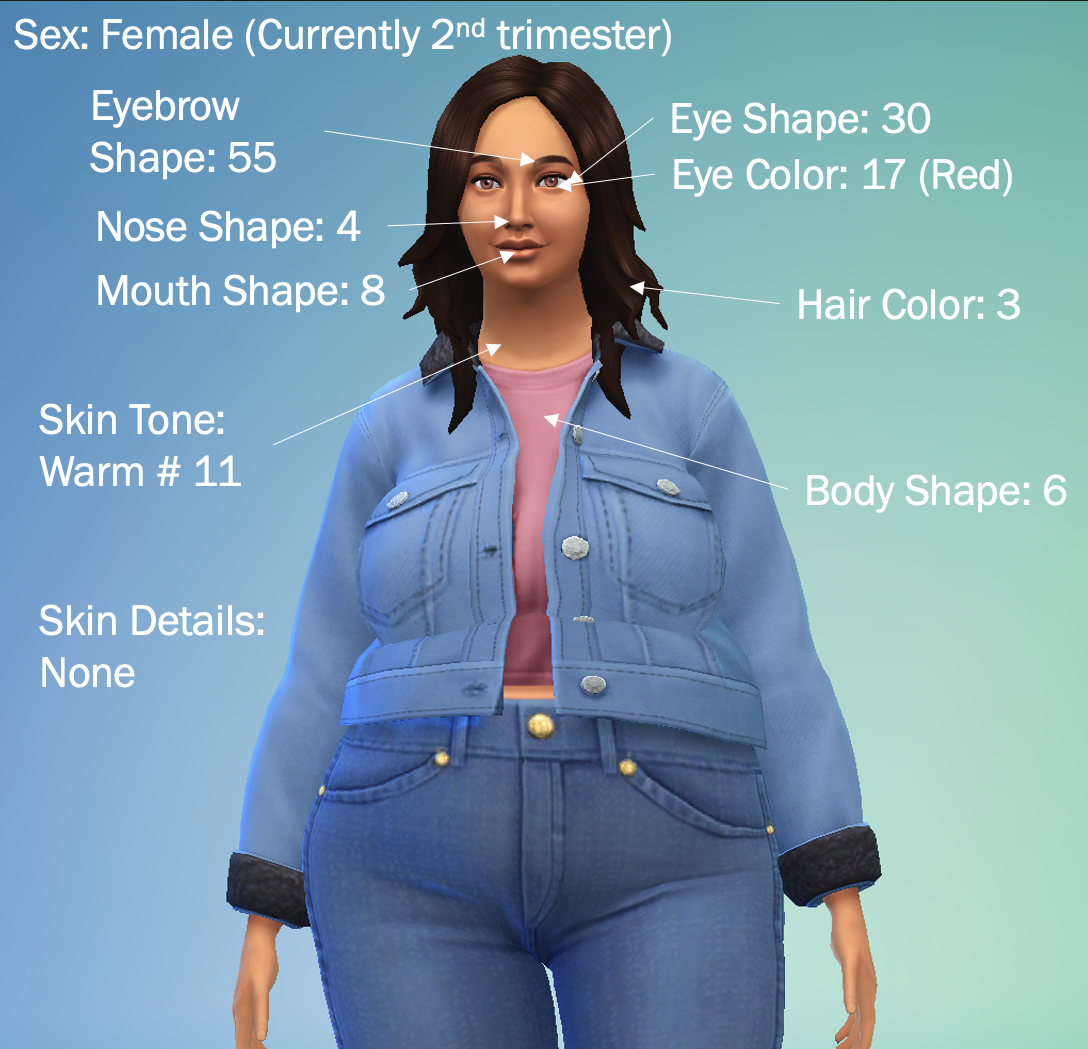
The Sim used in the experiment showing her features
Difficulties

I quickly became aware of a few difficulties in figuring out the genetics. First of all, male and female Sims have different numbers of face shapes. For example, male Sims have 56 eye shapes to choose from, but female Sims have 69.

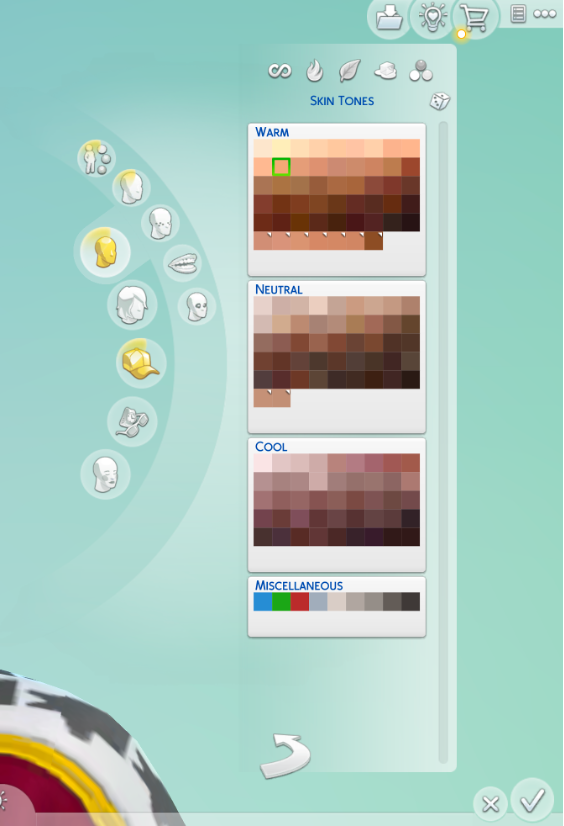
Then, there are three different categories (warm, cool, neutral) of skin colors to choose from. As I learned from years of playing, two Sims with different skin categories often have a baby with a skin color completely different from either of the parents, so I knew the game had problems with how to handle skins from different categories.

These problems made it a little more difficult, but with only two pregnancies to go, I finally figured out the whole system.

The pre-set skin tones available in Create A Sim

Discovery of Genetics System

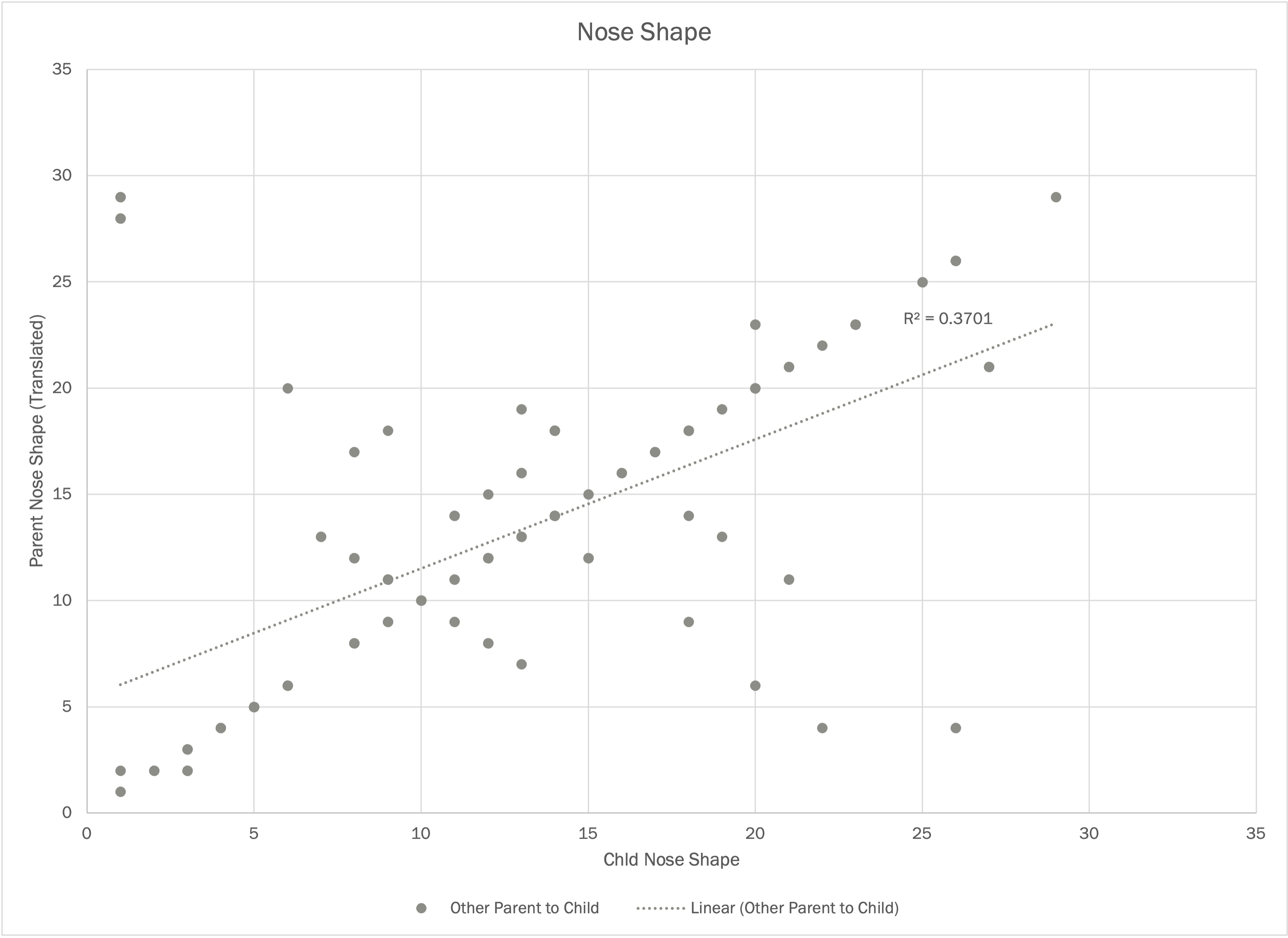
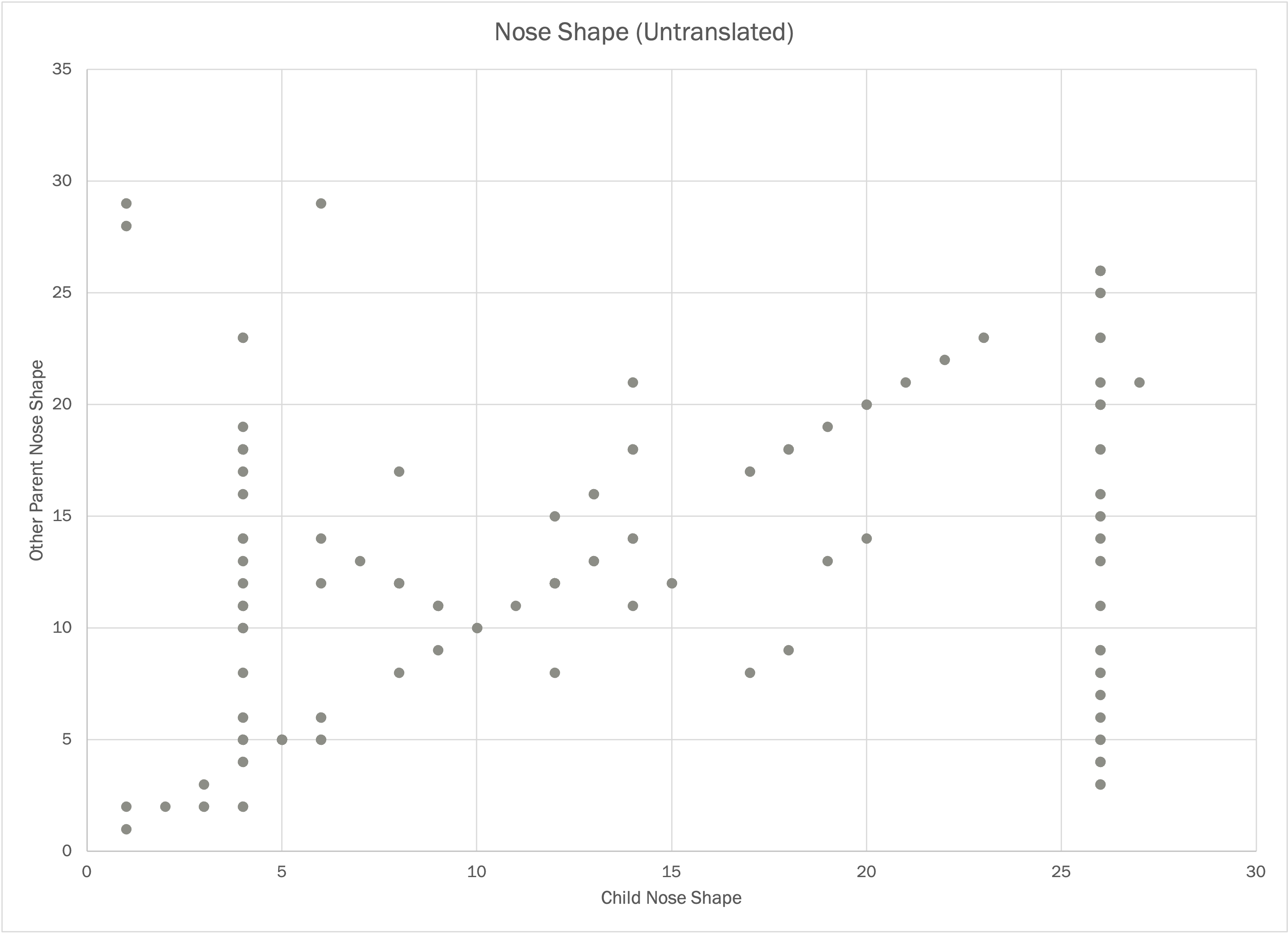
Before I figured the system out, I was watching the graph of nose shape very closely. It would make sense if there was a 50% chance of inheriting from each parent, but that would mean the shape would be a vertical line at nose 4 (Nadine’s nose) and a line through y = x (the other parent’s nose). The graph did look like that, but there was also a vertical line at nose 26 and many scattered points throughout.

Finally, I wondered if maybe nose 4 and nose 26 were related, so I took one of the female babies born with nose 4, changed her to male in CAS, and found the new nose shape. Sure enough, as a male Sim she had nose 26.

To fully test this, I found all the “mappings” from male Sims to female sims and vise versa for every shape. I wrote a Python program that would translate each shape if the parent’s child was the opposite sex. When I re-graphed the nose shapes, I saw a pattern much more like I expected.

Nose shape of baby and other parent before and after translation

Results for Shapes and Colors

Above, I used nose as an example not only because it was how I figured out the system, but also because it was the most accurate to predict. There was a very even split between the number of babies with Nadine’s nose vs the other parent’s nose, with only 6.38% having neither. Eye and mouth shape both had more of a majority with Nadine’s shape and a higher percentage with neither. Unfortunately, body shape did not have a “mapping” of the shapes across male and female sims that I could figure out from CAS, which resulted in 32.6% having neither of their parent’s body shape and only 24.8% with the other parent's.

Additionally, there were a few features I tracked that I solved quickly by using the percentage that inherited from Nadine. For hair color, babies inherited from each parent about evenly, and no babies had neither of their parents’ hair color. Eye color seemed to work the same way, unless the parent had a specific shade of green eyes or a specific shade of gray eyes. For example, parents with color 6 (green) had babies with eye color 7 (lighter green). Both hair color and eye color are inherited in a way that mimics real life. I quickly realized that eyebrow shape, much like hairstyle, generated randomly on each sim. For a category called skin details, Sims can have freckles, moles, age lines, vitiligo, and birth marks. In real life, freckles are a dominant trait, so any child whose parents have freckles will also have them. I was pleased to learn that freckles are also the only skin detail inheritable, with a 100% inheritance rate.

Results for Skin Color

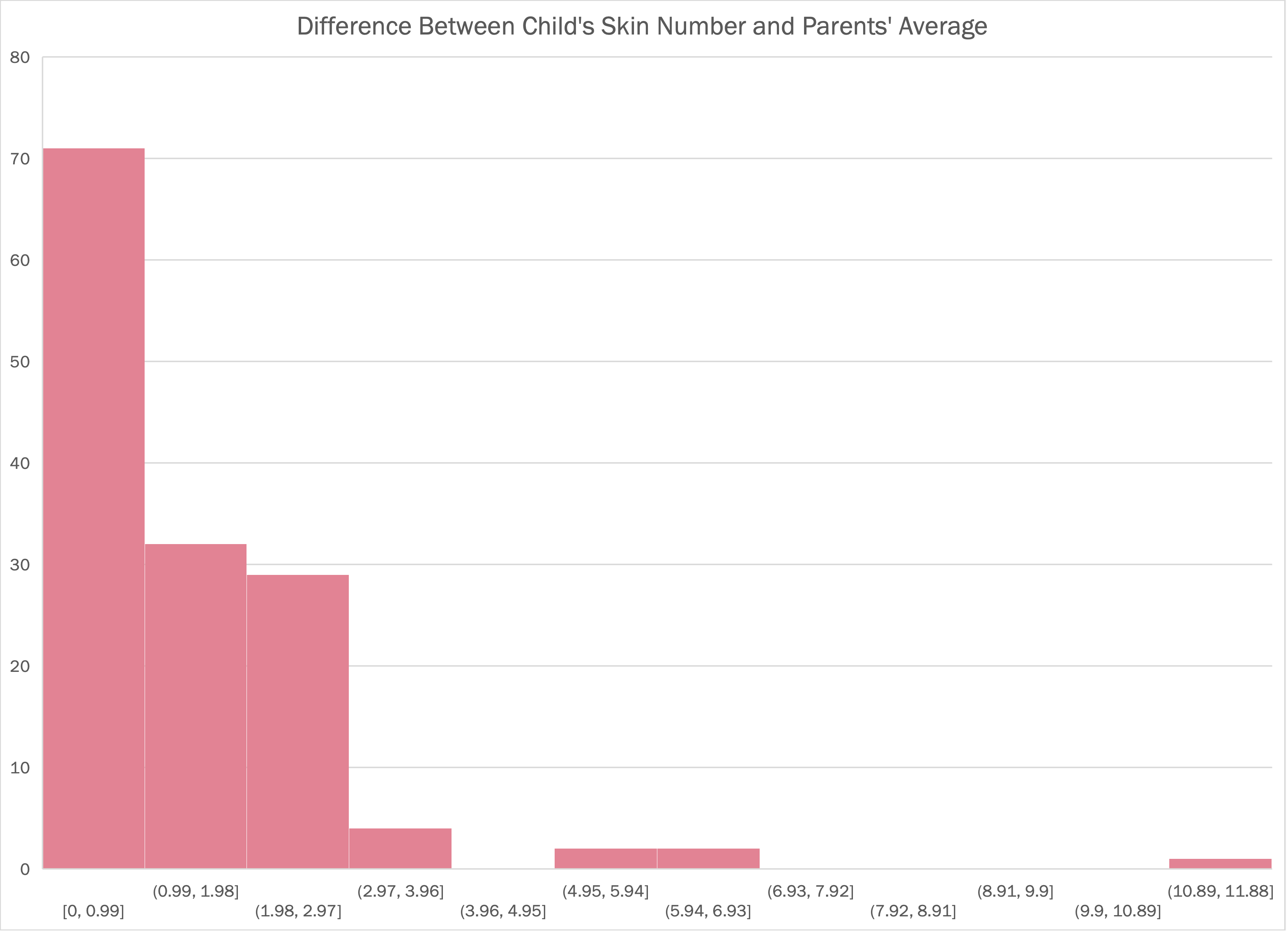
Skin color took a little more thought, since there are three categories. The most common category was Warm, and when both parents had Warm skin, the result was fairly simple. The child’s skin tone number was most often within three values of the average between the parents’ skin tone numbers. This pattern was easy to notice on it’s own, since most babies’ skin color was a shade visibly between both parents'.

When the parents had different skin tone numbers, about half of them still worked this same way. The number was within three of the average, and the category was chosen randomly. The other half inherited the same number and category from one parent.

Distribution of the difference between a baby’s skin tone and the average between the parents

Sex Ratio

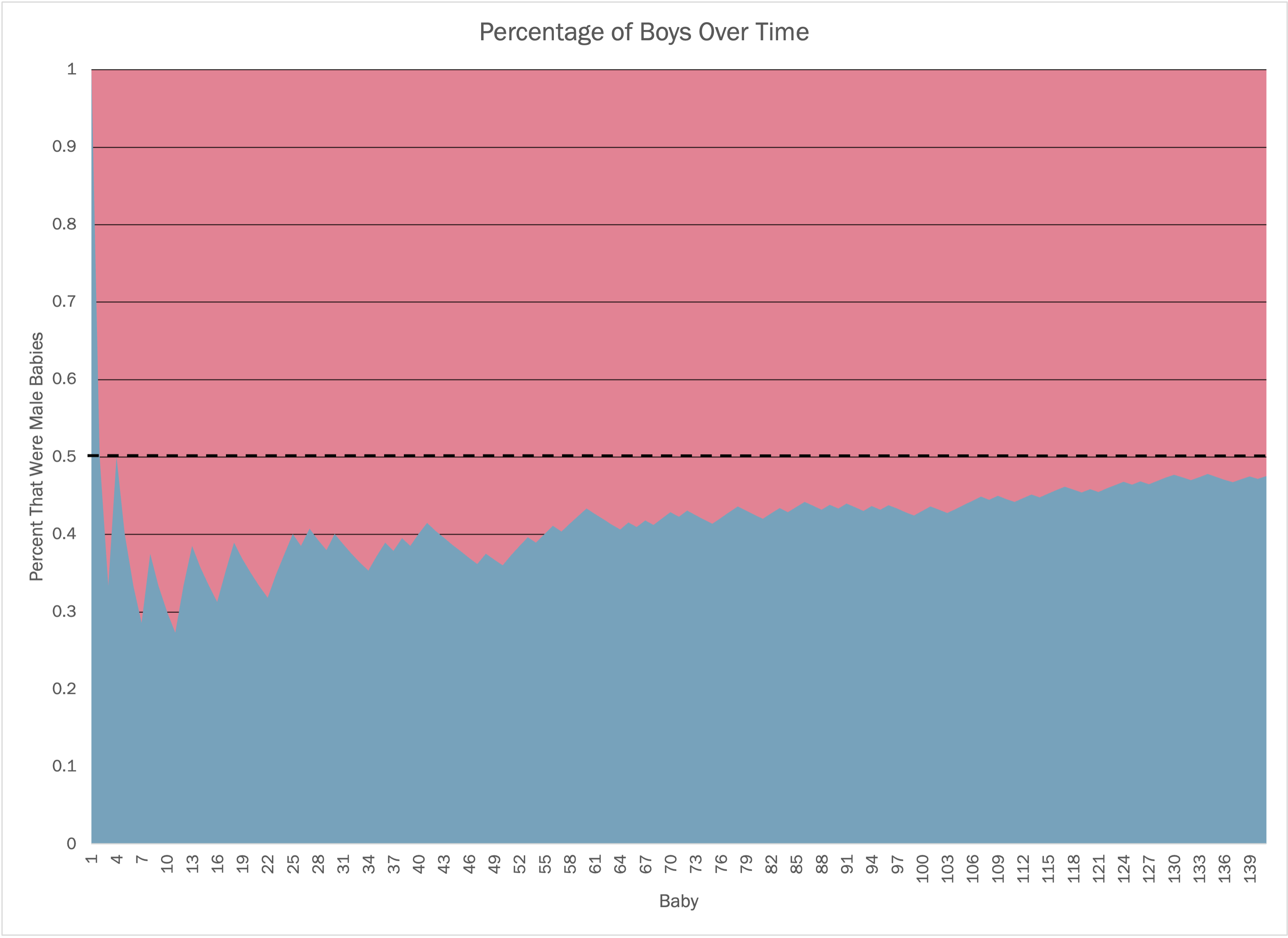
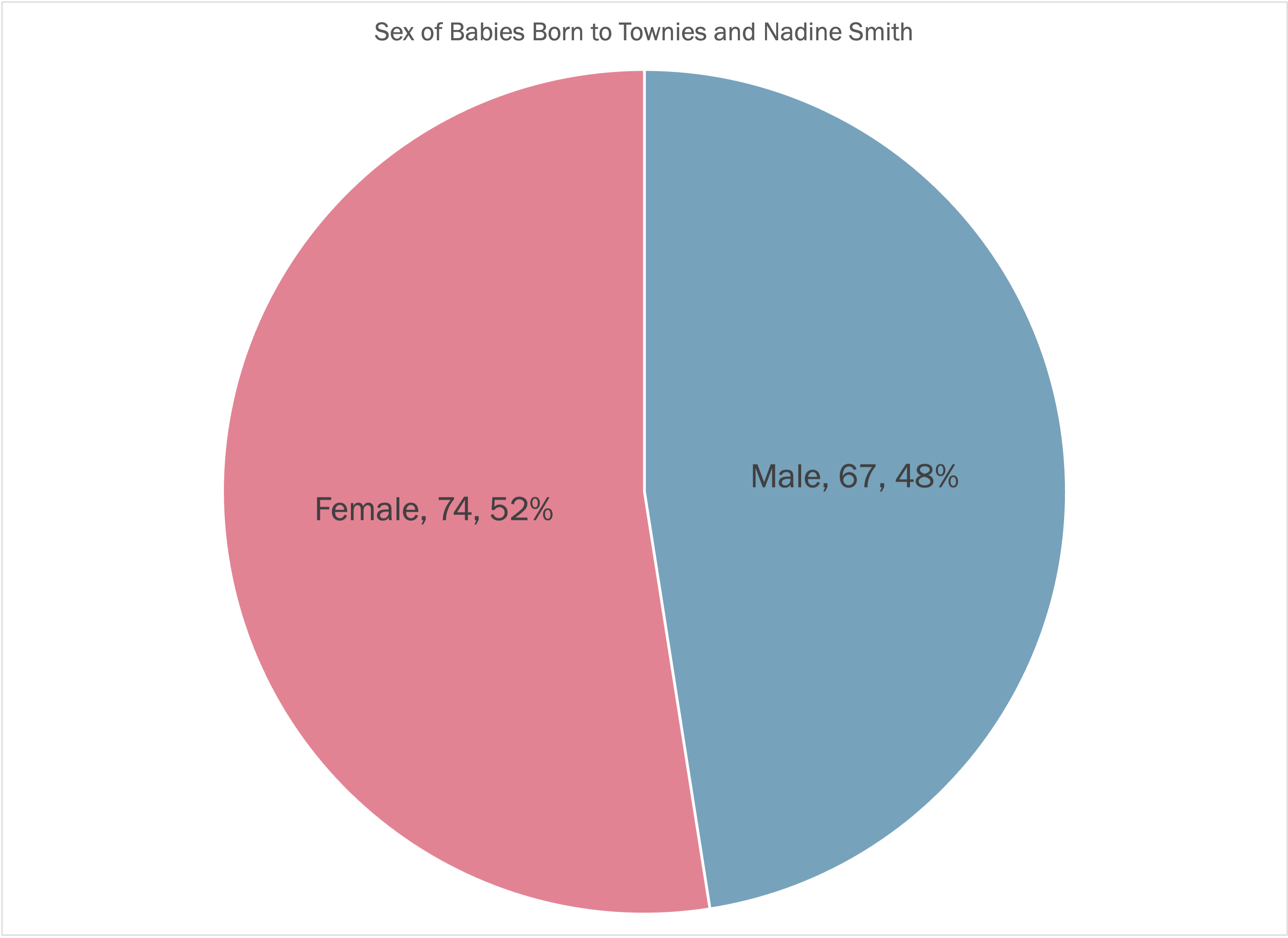
In the first half of the experiment, the majority of the babies born were girls, but as babies were born, more boys were born. The percentage of boys over time never reached 50%, staying steady a little under 50%. A random sampling from a sample distribution proved to be not significantly different from the expected 1:1 ratio.

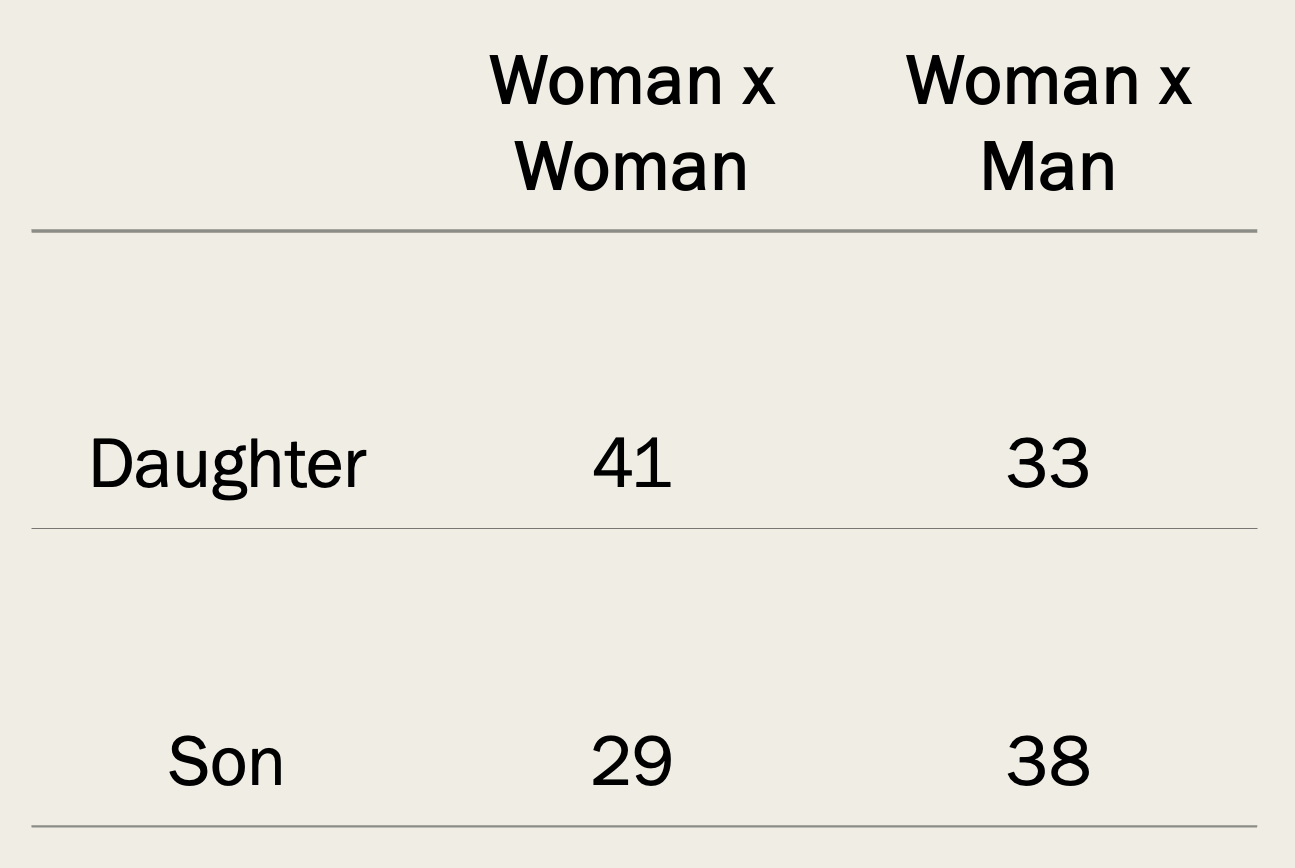
Breaking down the sex of the babies by the sex of the parents showed that a woman and another woman were 1.4 times more likely to have a daughter than a son, whereas a woman and a man were 1.2 times more likely to have a son than a daughter.

Sex ratio of babies over the course of the experiment

Other Findings

I also recorded the number of “try for baby” attempts to get pregnant, the number of multiple births, and statistics by world. I found there was an 84.8% chance of getting pregnant on the first try and about a 12% chance of twins with each pregnancy, or 1 in 8.5 pregnancies. Unfortunately, only one set of triplets was born, so I cannot accurately provide a triplet rate, but it is likely close to 1%. Interestingly, the twinning rate varied by world. In my game, there are 8 worlds. Two of the worlds had no twins born, one had one set, three had two, one had a twin and a triplet set, but one world had six sets of twins. This is also comparable to the real world, where countries in western Africa have very high twinning rates and countries in southern Asia have low rates.

One final thing I tested was the effect of quitting without saving while a Sim is pregnant. With Nadine pregnant, I quit the game without saving shortly before birth to repeat the birth three times. Each of the babies was identical, meaning that the genetics are decided as soon as the Sim is pregnant.

Conclusion

Reverse engineering the genetics system of the Sims 4 took a very long time and a lot of experimenting. I didn’t just solve the genetics and examine the sex ratios, I also examined common traits between Townies by world and the common names that randomly generated for the babies. I put together a presentation of my results, which can be found in a YouTube video on my channel.

Malin Elise Portfolio

© Malin Morris, 2025